- The ThinkerNick Newsletter
- Posts
- Solomon’s Paradox
Solomon’s Paradox
Why We Give Better Advice Than We Take!

Nick Daniels
March 12, 2026

Your weekly insights for building the ultimate lifestyle!
It's that T.I.M.E of the week again!
The newsletter that provides actionable life lessons to a wealthier, healthier, and happier future.
Solomon’s Paradox
Why We Give Better Advice Than We Take!
Newsletter Summary
TEACH
Solomon’s Paradox
Solomon’s Paradox
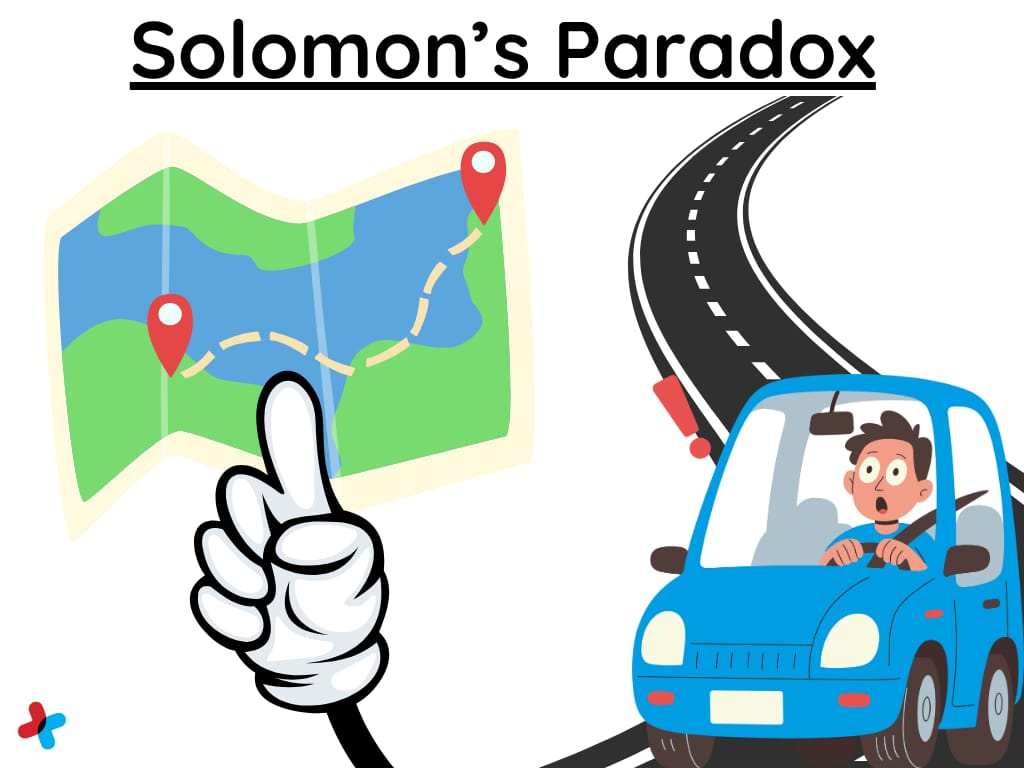
Think back to the last time you looked at a map to figure out a route somewhere.
From above, everything looks simple.
You can see every turn, every intersection, every traffic light. The best route seems obvious.
But the moment you’re actually on the road, things feel different.
There’s noise, traffic, pedestrians crossing unexpectedly, missed turns, confusing signs and pressure from the cars behind you.
Suddenly the clear path becomes blurry.
This is the essence of Solomon’s Paradox.
King Solomon was famous for giving incredibly wise judgments to others, yet struggled to apply that same wisdom in his own life.
Psychologists use this story to explain something fascinating:
“We give far better advice to other people than we give to ourselves.”
When we look at someone else’s situation, we see it like a map from above. The perspective is objective.
But when it’s our own life, we’re standing in the middle of the traffic.
Our emotions, ego, fear, and pressure blur the view.
That’s when we make impulsive decisions, ignore obvious solutions, or stay stuck longer than we should.
So the trick is simple:
When facing a difficult decision, zoom out and ask yourself:
“What advice would I give a friend in this exact situation?”
Then follow it.
The wisdom you give others is often the wisdom you need yourself.
INSIGHTS
Success Is Hard Until You Build Systems
Success Is Hard… Until You Build Systems
Since moving away from teaching and stepping deeper into business, I’ve started to realise just how important systems and processes actually are.
When you’re running multiple projects, relying on motivation simply doesn’t cut it. Some days you feel sharp and disciplined. Other days you don’t.
This video explains why systems matter so much. Instead of relying on how you feel, systems create repeatable structures that move you forward automatically.
Ali Abdaal breaks down five areas where systems make the biggest difference: goal-setting, time management, health, relationships, and personal finance.
It really resonated with me because I’m seeing this play out in real time. The more structure I build into my days and workflows, the less I rely on willpower.
The big takeaway?
Goals point you in the right direction.
But systems are what actually get you there.
MOTIVATION
Acceptance vs Struggle
The universe meets you at the depth of your surrender, not at the height of your struggle.
The ego believes everything must be earned through struggle.
That if you push hard enough, life will eventually obey.
But some things aren’t solved by effort.
They’re solved by acceptance.
Sit with that for a minute.
EXPLORE
Adobe Podcast
Adobe Podcast
This one is for the content creators, and honestly, teachers too.
Ever recorded something and the audio came out terrible? Background noise, echo, bad mic quality… we’ve all been there.
Adobe Podcast uses AI to clean up your audio and make it sound like it was recorded in a professional studio. You can remove background noise, enhance speech, add captions, and even edit audio like a text document.
For content creators, it’s brilliant for podcasts, voiceovers, and video narration.
But I also immediately thought about teachers. Recording lessons, creating revision material, or sharing explanations with students becomes much easier when the audio actually sounds clear and professional.
The best part? It runs entirely in your browser and has a free tier (with some limitations).
Definitely worth experimenting with if you work with audio.
Ambitious Question
What advice would you give a friend in your exact situation right now?
In case you missed last week’s newsletter, I spoke about:
TEACH: The Semantic Tree - a simple framework for learning anything by building knowledge from the roots (first principles) up to the branches (advanced understanding).
INSIGHTS: A breakdown of focus from Mark Manson’s podcast - why most attention problems come down to importance, clarity, calmness, or health.
MOTIVATION: The idea that bad luck may actually be protection in disguise - sometimes the things that don’t work out save us from something worse.
EXPLORE: The Parental Attribution Error - why we’re quick to blame our parents for our flaws but rarely credit them for our strengths.
Check it out here.
Feel free to share this if you gained any value from it. Feedback is also welcome.