- The ThinkerNick Newsletter
- Posts
- The Semantic Tree
The Semantic Tree
Stop Memorizing Leaves. Start Growing Roots.!

Nick Daniels
March 05, 2026

Your weekly insights for building the ultimate lifestyle!
It's that T.I.M.E of the week again!
The newsletter that provides actionable life lessons to a wealthier, healthier, and happier future.
The Semantic Tree
Stop Memorising Leaves. Start Growing Roots!
Newsletter Summary
TEACH
The Semantic Tree
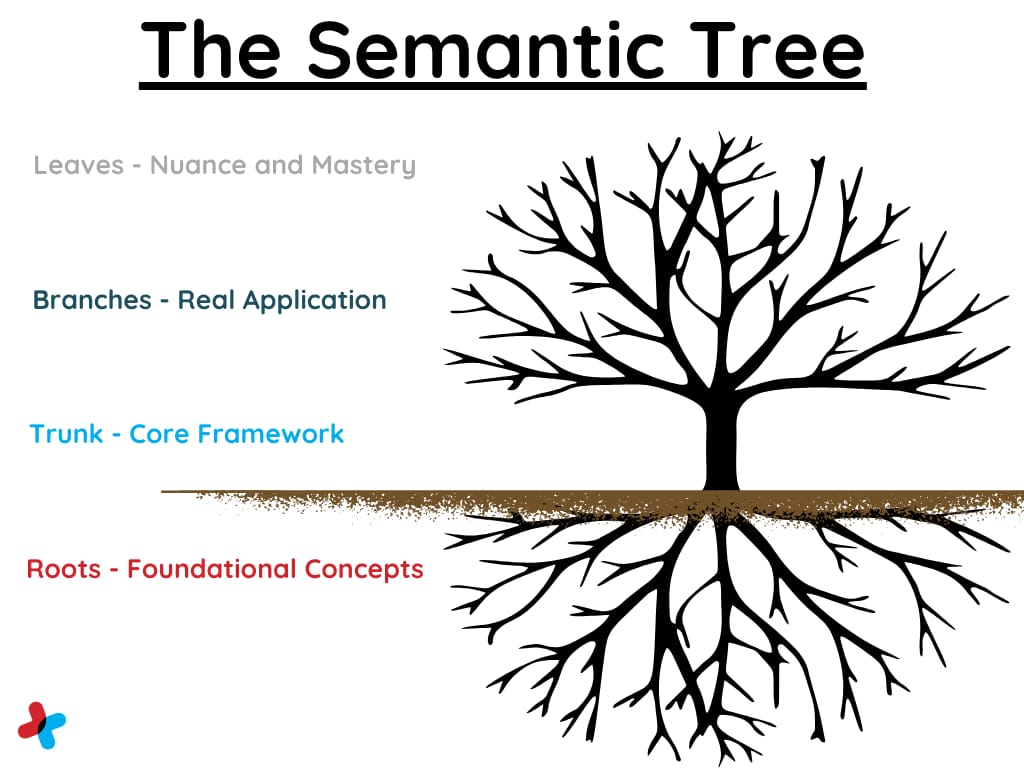
The Semantic Tree
Imagine you want to learn something new, such as investing, public speaking, marketing, or anything.
With the internet and now the introduction of AI, you can learn anything!
Most people start at the branches.
They jump into advanced YouTube videos, they copy strategies, or they chase hacks, but without roots, the tree collapses.
The Semantic Tree flips this.
You start at the roots, the absolute fundamentals.
Definitions, first principles and core concepts.
Then you build the trunk, and you see how those concepts connect. Only after that do you grow the branches, strategies, tactics, nuance, and finally, the leaves, mastery and creativity.
Seems simple, right? So why am I telling you this?
Here’s the life hack:
Use an AI tool such as CHATGPT and prompt it to become your semantic tree:
“Build me a semantic tree for [topic]. Start with the roots. Then build upward. Don’t skip levels.”
Suddenly, you’re not consuming randomly. You’re constructing understanding.
For example:
If you want to learn investing:
Roots → What is money? What is risk? What is compounding?
Trunk → Asset classes, market mechanics, inflation.
Branches → Portfolio strategy, diversification, behavioural finance.
Leaves → Personal allocation, advanced tactics.
This is how experts think. They don’t memorise leaves; they understand roots.
The quality of your results depends on the depth of your foundations.
So before you chase tactics, ask yourself:
Are you building branches… or growing roots?
I’m currently using it to study health and fitness. Give it a go!
Here is a copy of my detailed prompt below.
INSIGHTS
Why You Can’t Focus Anymore
I like how he takes a no-BS approach and explains concepts in a very easy-to-understand way.
In this episode, he breaks focus down into four common problems:
1) Lack of importance
If something doesn’t truly matter to you, your brain won’t prioritise it.
2) Lack of clarity
If you don’t know what the next step is, procrastination wins.
3) Lack of calmness
Stress, anxiety, and noise make it almost impossible to think clearly.
4) Lack of health
Poor sleep, bad diet, and low energy quietly sabotage attention.
When you look at it through this lens, focus stops being a discipline problem.
It becomes a systems problem.
Fix the inputs, the importance, clarity, calmness, and health, and focus becomes much easier.
Sometimes the issue isn’t that you can’t concentrate, it’s that your environment is working against you.
Definitely worth a listen.
MOTIVATION
Your Bad Luck Saved You
You never know what worse luck your bad luck has saved you from.
One of my favourite quotes.
Too often, we complain about what has happened to us or play the victim, but what if it could have been worse? Much worse!
Be grateful for the good and the bad. Both have played a key role in who you are today.
EXPLORE
The Parental Attribution Error

This was too good not to share.
Have you ever heard someone blame who they are on their parents?
I certainly have. At one point, I did it myself.
There’s a concept called the Parental Attribution Error.
It suggests that we’re incredibly quick to credit our parents for what’s wrong with us, our insecurities, our fears, our bad habits, but far slower to acknowledge that many of our strengths, values, and advantages also came from them.
As humans, we tend to externalise the bad and internalise the good.
When something goes wrong, we look outward. When something goes right, we claim ownership.
But growth begins when we hold both truths at once.
Yes, your upbringing shaped you.
But it shaped all of you.
The resilience, the work ethic, the discipline, the humour, the standards.
It’s easy to point the finger. It’s harder to take responsibility for who you are now.
Chris Williamson breaks this down brilliantly, and it forces you to reconsider how much of your identity you’ve outsourced to blame.
Ambitious Question
What skill could change your life if you learned it from the roots up?
In case you missed last week’s newsletter, I spoke about:
TEACH: The 1% Drift Principle - how small, almost invisible misalignments compound over time and quietly pull you far from your intended destination.
INSIGHTS: Why sleep is performance architecture, not laziness — and how understanding your chronotype can unlock better timing, energy, and output.
MOTIVATION: Relentlessness as a skill, because life constantly presents opportunities to quit.
EXPLORE: Foxy AI and how I’ve been experimenting with AI video tools to reduce friction and accelerate creative output.
Check it out here.
Feel free to share this if you gained any value from it. Feedback is also welcome.